
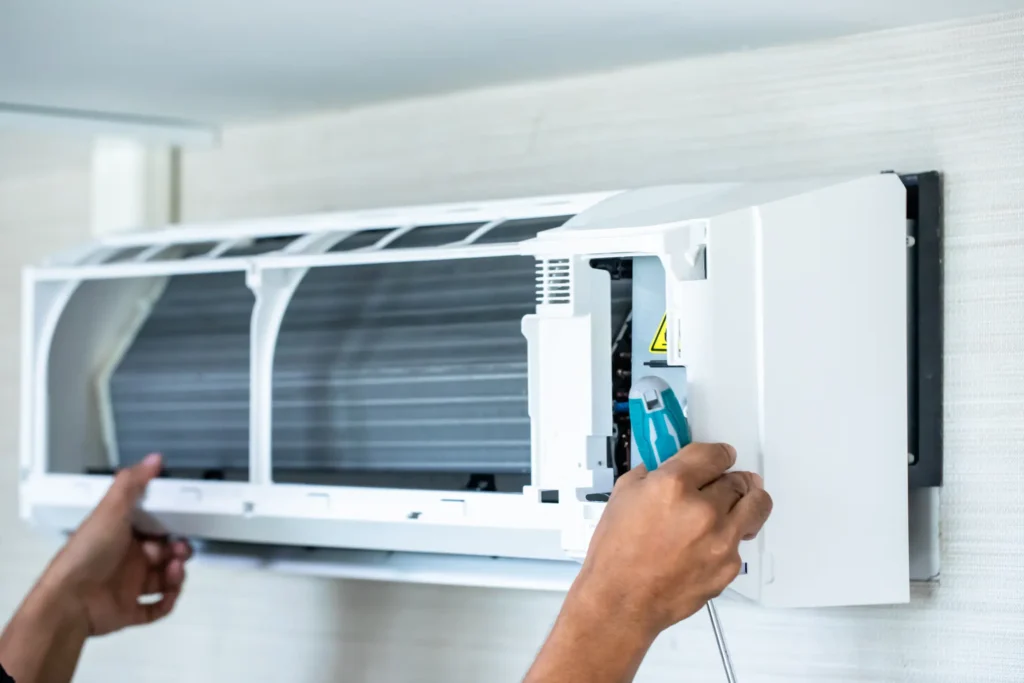
A musty odor is a cause for concern. When an AC starts producing an unusual odor, it indicates that something is wrong with your moisture control and system cleanliness. In Portland, our crawlspaces, older duct runs, and damp conditions make this problem especially likely. By partnering with Central Air Heating, Cooling & Plumbing, you can quickly diagnose a musty AC smell in Portland.
So, why does my AC smell musty? And can I prevent it? To learn more about improving your indoor air quality (IAQ), read on.
When an Unusual Odor Needs Emergency Attention
Before investigating an unusual odor, watch for warning signs that require immediate action:
- A rotten-egg or sulfur smell, or another reason to suspect a gas leak.
- A sounding carbon monoxide alarm or suspected carbon monoxide exposure. Carbon monoxide has no smell.
- Smoke, flames, or a burning odor that makes you suspect a fire.
If any of these occur, get everyone outside immediately. Don’t stop to turn off the AC, adjust the thermostat, operate electrical switches or breakers, or use your phone indoors. From a safe location outside, call 911 and explain what you noticed. For a suspected gas leak, you can also notify your gas provider’s emergency line from outside. Stay out until emergency responders say it is safe to return.
Once the home has been cleared, our team can help with any necessary HVAC inspection or repairs. Equipment identified as the source of the emergency should remain unused until a qualified technician has inspected it and completed the required repairs.
What a Musty AC Smell Usually Means
If your AC smells like mildew, it is likely due to some type of moisture or contamination. This odor is not simply a nuisance. Musty smells only happen if mold and mildew have been allowed to grow because of ongoing moisture.
A musty smell is also distinctly different from a burning or sulfuric odor. A burning smell can indicate an electrical problem or overheating component and should always be investigated promptly. Meanwhile, the scent of sulfur or rotten eggs indicates a natural gas leak, which is also an immediate emergency. If you think gas or electrical malfunctions may be at fault, turn off your AC, evacuate your home, and call for help.
Most Common Causes of a Musty Smell From an AC
Why does my AC smell musty? The following are the most common reasons why you might notice a moldy AC smell in Portland.
Moisture Around the Evaporator Coil
When moisture builds up around the evaporator coil, it can allow mold and mildew to grow. This can lead to a musty scent.
Dirty Drain Pan or Drain Line
Similarly, organic buildup in your drain line can cause the drain line and drain pan to back up. This stagnant moisture can lead to mold and mildew growth if it isn’t dealt with promptly.
Wet Duct Sections or Insulation Issues
Wet ductwork or insulation can cause the same type of smells. For example, poor insulation can cause vents to sweat, leading to mold formation. Similarly, duct leaks can allow humidity from your crawlspace or attic to get into the rest of your home.
Filter Neglect
If your air filter hasn’t been replaced recently, it can contribute to a stale or musty odor. Ideally, the filter should be changed every 30 to 90 days.
Broader IAQ or Humidity Problems
Sometimes, the smell is from more than just a single dirty component. If your home has ongoing humidity or IAQ issues, you’ll need a full IAQ evaluation to determine the best solution.
Safe Checks Homeowners Can Make First
For a musty odor without any of the emergency warning signs above, the following checks can help you gather useful information before booking a repair appointment.
- Replace the Filter: First, check your air filter to see if it needs to be changed.
- Note Where the Smell Occurs: Pay attention to where the smell is strongest. This is likely the source of the odor.
- Search for Sources of Moisture: Look around your indoor components for visible signs of moisture. For instance, water near the drain pan may be due to a clogged drain line.
When a Musty Smell Points to a Bigger Comfort or IAQ Problem
A musty AC smell in Portland may be connected to a larger problem. High humidity levels, drain issues, and dirty components can cause this smell to recur.
This is markedly different from a one-time stale odor from inactivity. If you’ve noticed recurring musty odors, you should schedule an IAQ evaluation to determine what the underlying problem is.
How a Technician Diagnoses the Source of the Smell
When you call our team about your air conditioner’s musty smell, there are a few things we will do to diagnose it. We’ll first inspect your evaporator coil. If the coil is dirty or your system has poor airflow, it can freeze. When the frozen coil thaws, excess condensate can promote mold and mildew growth, leading to a dirty evaporator coil smell.
Then, we will inspect your drain line for clogs, a cracked drain pan, or similar issues. Depending on the problem, we may flush the drain line or replace the drain pan.
As part of our inspection, we’ll thoroughly test your airflow and IAQ. If you have persistent humidity issues or elevated allergen levels, you may need to install a whole-home dehumidifier or air purifier.
While it may feel easy to reach for Lysol or a candle to cover up the scent, deodorizing the air isn’t a long-term solution. This odor means that there is something wrong with your HVAC system. To prevent additional damage and IAQ issues, the issue must be addressed.
Repair, Cleaning, or IAQ Follow-Up
Once our technician diagnoses an IAQ AC smell problem in your home, they will work with you to decide on the best solution. The following are some common methods for resolving musty indoor air.
- Component Cleaning: We can clean a dirty evaporator coil, drain line, drain pan, or other component to remove the source of the musty odor.
- Drainage Correction: Sometimes, the slope of the drain line prevents water from effectively leaving the pan. When needed, we can update your installation for better drainage.
- Duct-Related Issues: Poor duct insulation and duct leaks can lead to humidity and IAQ issues. The average home loses around 20% to 30% of its conditioned air through ductwork. By sealing, repairing, or replacing ducts, you can prevent IAQ issues and improve your home’s energy efficiency.
- IAQ Upgrades: After an IAQ assessment, we can determine if any ongoing problems need to be addressed. For example, many homeowners install whole-home air purifiers in Portland to alleviate mold issues, wildfire smoke, and pollen allergens. Meanwhile, dehumidifiers are effective for lowering your home’s relative humidity (RH) during our area’s extended rainy season.
Schedule AC or IAQ Service in Portland
If you’re dealing with a musty AC smell in Portland, we can help. Note when the smell appears, whether your cooling performance changed, and if there are any moisture issues present in your home. Then, relay this information to one of our team members when you reach out for repairs. Through our same-day services and reliable diagnostics, you can quickly discover the source of the problem.
Book your next AC inspection today.