
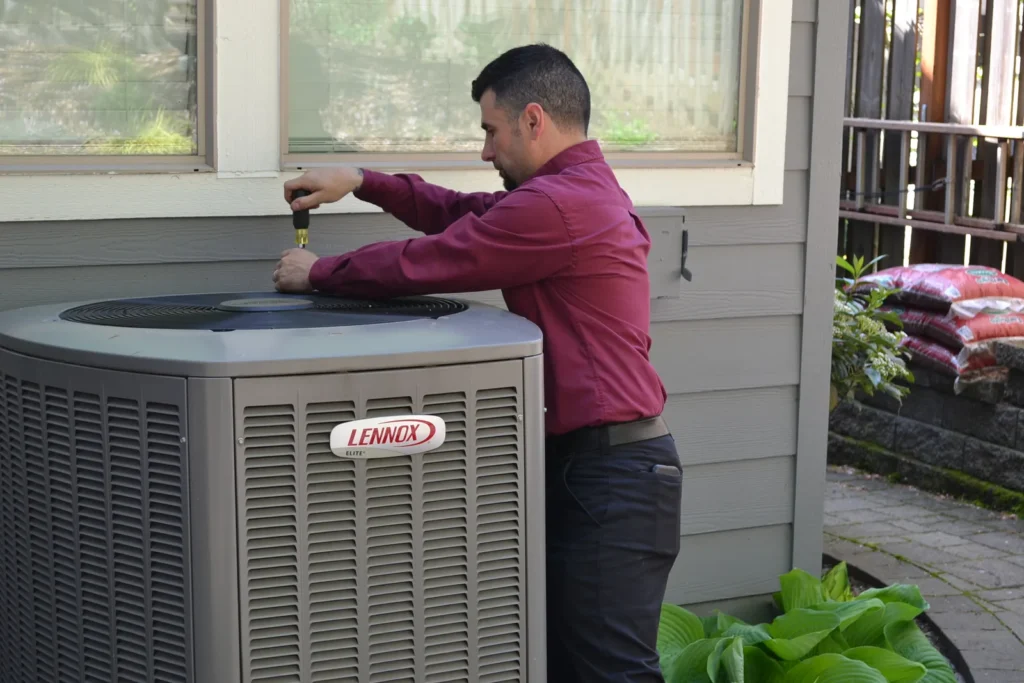
If your AC freezes on a hot day, you’ll quickly find out. A frozen evaporator coil will struggle to cool the air, so you’ll notice poor cooling performance and extended runtimes. By promptly addressing a frozen AC coil in Portland, you can prevent additional damage to the AC and maintain your family’s comfort.
So, why is my AC freezing up? And what can be done about it? To learn more about this common summertime AC issue, read on.
What a Frozen AC Coil Usually Means
If your evaporator coil is frozen, thawing it is only the first step. An underlying problem caused it to freeze, so you must figure out the root cause in order to prevent the coil from freezing again. Simply defrosting the coil is not a long-term solution.
Most Common Reasons an AC Coil Freezes Up
There are a few common reasons why your AC might have a frozen evaporator coil. By figuring out the cause, you can determine which solution will work best for resolving the problem and preventing it from recurring.
Dirty Filter or Blocked Airflow
If there isn’t enough airflow in your heating, ventilation, and air conditioning (HVAC) system, it impedes the transfer of heat. Eventually, this can cause the coil to freeze.
Closed Vents or Duct Restriction
While dirty air filters are a common reason for airflow problems and frozen coils, closed vents and ductwork restrictions can also hinder airflow.
Blower or Fan Problems
When the blower motor or fan fails, it limits the amount of airflow in your system. Ultimately, this can cause the evaporator coil to freeze.
Refrigerant Issues
If refrigerant levels are low, your AC’s cooling capacity decreases. As a result, the AC will struggle to remove heat from your home, often causing the system to run longer without reaching the desired temperature. As the pressure drops inside the refrigerant lines, the refrigerant’s boiling temperature falls below the freezing point. Then, water vapor in the air condenses and freezes around the lines.
Wrong Operating Conditions
Extended runtimes and poor operating conditions can also contribute to frozen AC coils. For example, trying to cool the indoor air to extremely cold temperatures on an especially hot day can cause the AC to run longer and lead to a frozen coil.
Signs the Frozen Coil Is Causing Bigger Cooling Problems
While fixing a frozen coil may be as easy as changing a dirty filter, more repairs may be necessary. Left untreated, a frozen coil can damage the blower motor and compressor. The added moisture can also cause extensive water damage. In the following situations, you should schedule a professional diagnostic appointment right away.
- Warm air from the vents
- Poor cooling performance
- Indoor water around the unit from melting ice
- Weak airflow
Safe First Steps Before Calling for Repair
Wondering, “Why is my AC coil freezing up?” As a homeowner, there are a few safe troubleshooting tips you can try on your own.
- Shut the Cooling System Off: To avoid worsening the problem, you should shut off the cooling system. Then, switch it to fan-only mode so that warm air circulates over the iced-up coil.
- Check the Filter: When we go into Portland homes to diagnose airflow issues and frozen coils, clogged filters are one of the most common causes. By changing your filter and making sure your vents are unobstructed, you can ensure your AC doesn’t ice up during the first sustained hot stretch of the year.
- Don’t Chip Ice or Open Compartments: If your AC is icing up in Portland, you should never try chipping the ice off because this could damage the unit. For your own safety, you should also never open sealed compartments.
No matter what, you should not ignore a repeatedly frozen AC coil in Portland. Frequent freezing can cause water damage and indicate an underlying issue. Rather than defrosting the coil, resetting the AC, and ignoring the issue, you should schedule professional AC repairs instead.
How a Technician Diagnoses a Frozen Coil
Even if your AC is frozen but still running, you should shut it off to allow the coil to thaw. Continuing to run the AC with a frozen coil can damage the compressor and other components. Once you’ve finished the basic troubleshooting steps above, you can give our team a call for professional diagnostics.
As part of our frozen AC repair, we’ll first check your system’s airflow and inspect the blower motor. We’ll perform a temperature split test to help us determine if low refrigerant levels are causing the issue. If they are, we’ll also need to find and repair the source of the leak.
Our team isn’t going to simply thaw the unit and switch it on. Frozen coils can be due to an extensive list of issues, so we’ll carefully inspect your ductwork, test the thermostat controls, and check each component to determine the underlying cause.
Repair vs. Replacement for a Repeated Freeze-Up Problem
If your AC is running but not cooling properly, our HVAC technicians can help. We’ll quickly evaluate whether a repair or replacement is the right choice by considering the following factors.
- Repair Costs: It is generally better to do repairs if they are relatively inexpensive. As a general rule of thumb, repairs make more sense if the cost of repairs multiplied by the unit’s age is less than $5,000. If the cost is more than $5,000, a replacement may be necessary.
- Unit Age: An older unit will likely require more frequent repairs. Once the unit is approaching the end of its lifespan, a new AC installation may be the best long-term option.
- Repeated Repairs: If your unit requires frequent repairs, it may need to be replaced. Similarly, a unit that freezes up constantly is likely near the end of its lifespan.
- Future Plans: Your family’s future plans also impact this equation. If you plan on moving in the near future, repairs may be a better choice because you won’t be around long-term to benefit from a new unit.
Schedule AC Repair in Portland
If you’re dealing with a frozen AC coil in Portland, note when the freezing started and any airflow changes. You should also note the presence of water and any other symptoms. With this information and a quick evaluation, our team can diagnose the cause of your frozen coil and help you decide on the best solution.
Reach out to book your next AC inspection.