You’re just arriving home from a long day at the office when you notice water pooling near the door of your utility closet. After further inspection, you realize it is coming from the AC drain line.
Fortunately, this type of problem can be readily fixed by an experienced heating, ventilation, and air conditioning (HVAC) technician. Because many malfunctions can result in moisture and pooling water, it’s important to reach out for professional help. Indoor water damage poses a major risk to your drywall, flooring, and insulation, so it must be addressed promptly.
So, why is my AC leaking water inside the house? For common causes and troubleshooting for ACs leaking water in Portland, read on.
Why an AC Produces Water in the First Place
When an AC operates, it removes moisture from the air. This moisture has to go somewhere, which is why condensate drain lines are set up to direct water away from your home.
Normally, this process occurs without you noticing it. If there is a clogged AC drain line or a corroded drain pan, you may notice that your AC is leaking water inside your home. Other issues, like a condensate pump failure or a frozen coil, can also cause moisture to appear in places where it shouldn’t be.
Most Common Reasons an AC Leaks Water Indoors
There are a few common reasons you may deal with an AC leaking water in your Portland home. By understanding why your AC is leaking water inside, you can determine the best solution for the problem.
Clogged Condensate Drain Line
When the condensate drain line is clogged by debris or mold, water can back up into the pan and eventually overflow.
Frozen Evaporator Coil Thawing
Dirty coils, clogged air filters, and poor airflow can cause the evaporator coil to freeze. As it thaws, it can end up overflowing the drain pan and producing a water leak.
Cracked or Rusted Drain Pan
Damaged drain pans can allow water to leak out.
Condensate Pump Failure
For ACs that have a condensate pump, the pump could be causing water accumulation if it is no longer working properly. Without the pump, water can’t drain from the reservoir. Besides potentially overflowing, this can trigger a safety shutoff for your entire AC system.
Poor Installation or Drain-Line Pitch Problems
If your home doesn’t have a pump, it relies on gravity and a drain to remove water. A drain line that was installed poorly and has the wrong pitch will fail to remove water from your home.
Signs the Leak Is Coming From a Drain or Pump Issue
When the source of the leak is the drain or condensate pump, you’ll likely notice the following symptoms.
- Standing Water Near The Air Handler: Water that overflows from the drain pan or pump reservoir will be around the air handler.
- Frequent System Shutdowns: The overflow switch in your drain pan will trigger your AC to shut off if the water level rises too much.
- Unexplained Moisture: Any time there is water present around the indoor unit without a specific reason for it, it may indicate a problem with your drain or pump.
Signs the Leak May Be Tied to a Frozen Coil or Airflow Problem
Sometimes, leaks are connected to frozen coils and airflow issues. When this is the case, there are a few symptoms you may notice.
Before the leak actually occurs, you may notice weak airflow, ice buildup, or poor cooling performance. These may indicate restricted airflow or low refrigerant from a leak. While you can replace the air filter on your own, inspecting the ductwork, adjusting the blower motor speed, fixing refrigerant leaks, and similar tasks should be left to the professionals.
Safe First Steps Before Calling for Repair
Before you reach out for indoor AC water leak repair, there are a few things you can do to troubleshoot on your own.
Shut Off the System if Water Is Actively Pooling
If water is pooling around your AC, you should shut off the unit completely in order to prevent additional water damage.
Protect Nearby Flooring or Drywall
Use towels and fans to dry your flooring and drywall, as long as it is safe to do so. Mold can start growing in just 24 to 48 hours if it has the right conditions, so be proactive about preventing water damage.
Check the Filter and Visible Drain Area Only
Air filters should be replaced every 30 to 90 days, although replacements should take place more frequently during periods of peak use. Check your filter to see if it needs to be replaced with a new one. Then, visually check your drain area to see if the water is coming from the drain pan or the drain line.
Do Not Keep Restarting the System if It Shuts Off
If the overflow switch shuts your AC off, don’t restart it. Continuing to run your AC will produce more water and potentially worsen the problem. Instead, clean up the water yourself and call for repairs.
How a Technician Finds the Source of an Indoor AC Leak
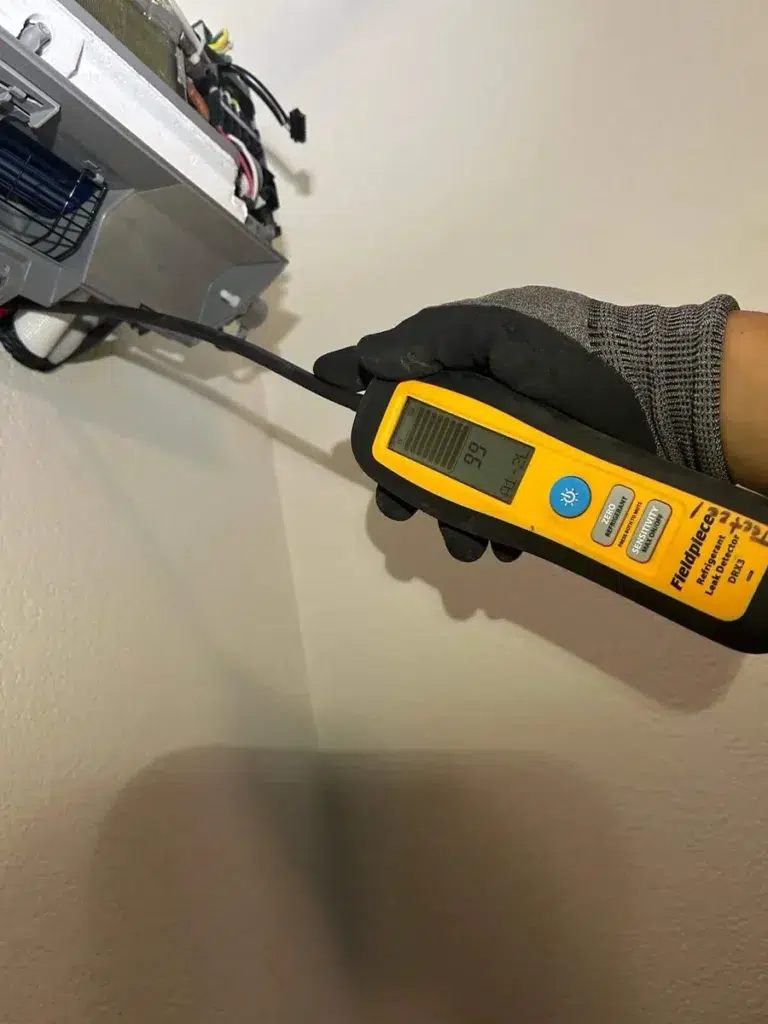
Once you call for AC repairs, our technicians will quickly inspect your drain line and pan for signs of clogs and corrosion. Then, we’ll test your airflow performance and evaluate your coil condition. These tests help us figure out if we’re dealing with a basic drain-line cleaning or if the real issue is upstream from the visible symptom.
Leak Repair vs. Bigger System Correction
Often, we can quickly fix the problem by clearing the drain line, adjusting your airflow, or replacing the condensate pump. In these cases, the adjustments are relatively inexpensive and generally take just a few hours or less to complete.
Sometimes, repairs are more extensive and indicate the entire unit is gradually starting to fail. A typical AC starts to reach the end of its lifespan around the 10-year mark. If your unit is past this point and already requires frequent repairs, it may be time to consider a full AC replacement instead. Financing is available if the cost of repairs or a replacement is a concern.
Schedule AC Repair in Portland
If you’re looking for the answer to “Why is my AC leaking water inside the house?”, we can help. At Central Air Heating, Cooling & Plumbing, our team can quickly diagnose the cause of ACs leaking water in Portland homes and determine the best course of action. Call us at 971-435-7303. Through our timely repairs and maintenance plan, we can reduce the likelihood of future repairs and premature replacements.
Book your emergency AC repairs today.