Your allergies are acting up, and dust keeps building up inside your home. While seasonal allergies can be a struggle in Oregon, the real culprit behind your allergy symptoms might be lurking inside your heating, ventilation, and air conditioning (HVAC) system. If you don’t stick to a consistent HVAC filter replacement schedule, your indoor air quality can suffer. By being proactive, you can protect your HVAC equipment and alleviate your family’s respiratory symptoms.
So, how often do you replace HVAC air filters? And what’s the right type for your home? To learn more, read on.
Why Your Air Filter Is the Most Important Part of HVAC Maintenance
The right air filter change frequency in Portland is an essential part of your AC and furnace maintenance. A timely filter replacement can reduce dust levels, improve indoor air quality, decrease strain on your HVAC system, boost your energy efficiency, and enhance your family’s comfort.
What the Filter Actually Does
As air circulates through your HVAC system, it is sent through the air filter. A filter is like a sieve that removes small particles from the air. Besides protecting your family from breathing these particulates, the filter also keeps contaminants out of your HVAC system.
What Happens When You Forget to Change It
When a pleated filter is clean, it will be white or light gray. If you hold the filter up, light will easily pass through it.
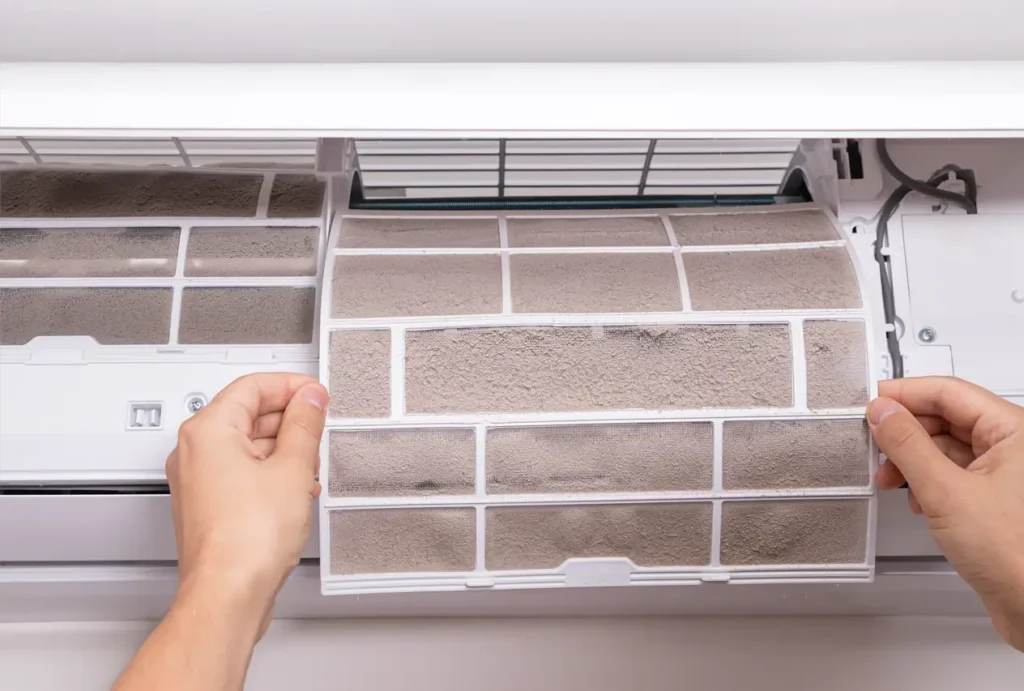
Dirty filters will look brown or dark gray. Besides feeling stiff, they will have visible dust buildup on the intake side. Because a clogged filter limits airflow, it can reduce your HVAC efficiency, increase dust levels in your home, worsen allergy symptoms, and result in added wear to your HVAC components.
Filter Replacement Frequency by Type
The right air filter change frequency in Portland depends on the filter type you use.
1-Inch Disposable Filters: Replace Every 30 to 90 Days
These filters should generally be changed every 30 to 90 days. However, you’ll need to change them sooner if you have pets or allergies.
4-Inch and 5-Inch Media Filters: Clean Every 1 to 3 Months
Some homes and businesses use 4-inch and 5-inch media filters in order to boost indoor air quality. This filter style must be cleaned every 30 to 90 days. As long as the filter is properly cared for, you can wait a year or more between replacements.
This filter size is typically used in deep-pleated cabinets. While a larger size improves the filtration quality, you can only use this size if your unit has the filter slot to accommodate it. If your equipment can’t handle the higher filtration level, it will strain the components.
Washable and Electrostatic Filters
While these filters will last 60 to 180 days before you need to get new ones, they must be cleaned every 30 to 60 days. Many homeowners opt for washable and electrostatic filters to save money on filter replacements and to reduce waste.
Factors That Shorten Filter Life in Portland
As a homeowner, you should change your filter when you see dirty air filter symptoms, even if it isn’t technically time for a replacement yet. There are four main factors that determine how long your filter will last before it needs to be changed.
Pets and Dander
In Portland, homes with pets often require filter changes every 30 days. During your pet’s heavy shedding season, the filter can quickly become clogged.
Wildfire Smoke Season
During our wildfire season, your HVAC filter replacement schedule should be shortened. The small smoke particulates accelerate filter loading, so filters must be changed more frequently.
Older Homes with More Dust and Debris
When it comes to AC and furnace filter replacements in Oregon, you’ll generally need to perform more frequent replacements if you have an older home. These properties tend to have more dust and debris, which can quickly cause filters to become soiled.
Running the System Around the Clock
How intensely you use your HVAC system has a direct impact on how dirty the air filter gets. During periods of peak usage in the summer and winter, you’ll need to replace the filter more frequently.
MERV Ratings Explained: Which Filter Is Right for Your System?
The Minimum Efficiency Reporting Value (MERV) shows how efficient a unit is at catching particles that are between 0.3 and 10 microns in size. A higher MERV rating means the filter is more efficient at removing these particles. While MERV ratings can range between 1 and 20, most air filters are rated between MERV 8 and MERV 13.
Why Higher MERV Is Not Always Better
As a homeowner, it’s important to stick to the MERV rating guide for your system. Sometimes, we’ll see homeowners use a MERV 13 or higher filter for a system that only handles MERV 8.
Using an excessively high MERV rating is an issue because it restricts airflow below the unit’s minimum cubic feet per minute (CFM) requirement. In the winter, this can cause your furnace’s heat exchanger to crack. Meanwhile, a high MERV can lead to frozen evaporator coils in the summer.
The Sweet Spot for Most Portland Homes
The best HVAC filter for Portland homes will typically have a MERV rating between 11 and 13. MERV 11 can filter out dust, pet dander, and other contaminants. If your system is capable of handling a MERV 13, you can enhance your indoor air quality by filtering out the small smoke particles that come from our area’s frequent wildfires.
Never use a MERV filter that isn’t the right rating for your AC or heating system. If your HVAC system can’t handle higher levels, you can always install a whole-home air purifier instead.
How to Check and Replace Your Filter
Besides learning how often to replace an HVAC air filter, you also need to learn how to do so. The following step-by-step guide will work for most HVAC setups. When in doubt, you can always talk to one of our HVAC technicians.
Change the Air Filter in a Return Air Duct
- Unhook the latch on the cover grille.
- Then, use a microfiber cloth to clean the grille.
- Follow the manufacturer’s instructions to replace the furnace filter.
- Close the grille and secure the latch.
Replace the Filter in Your Air Handler
- Turn off the power to your HVAC system.
- Unlatch the door.
- Replace disposable filters. For non-disposable filters, brush off debris before using a vacuum to remove dust. Afterward, run water in the opposite direction of the airflow. Reusable filters must be air-dried before they are put in your unit again.
- Turn the HVAC system back on after the filter has been replaced.
When To Call an HVAC Professional
Changing the air filter should be a normal part of your furnace and AC maintenance. It’s especially important to replace the filter if you notice any airflow or performance issues. You should reach out for professional help if any of the following situations occur.
- You changed the air filter, but the performance issue didn’t go away.
- The HVAC system produces an unusual odor.
- You have a commercial HVAC system and aren’t sure how to change the filter.
- It’s time for your spring or fall HVAC tune-up.
- You want to upgrade your filtration quality, but you aren’t sure if your HVAC system can handle a higher MERV rating.
Improve Your Home’s Airflow
Learning how often to replace HVAC air filters can help you avoid unexpected breakdowns and costly repairs. While the appropriate HVAC filter replacement schedule can vary, we generally recommend changing filters every 30 to 90 days.
Interested in improving your home’s air quality? Reach out to Central Air Heating, Cooling & Plumbing at (971) 435-7303 to get a free estimate on your next service.