
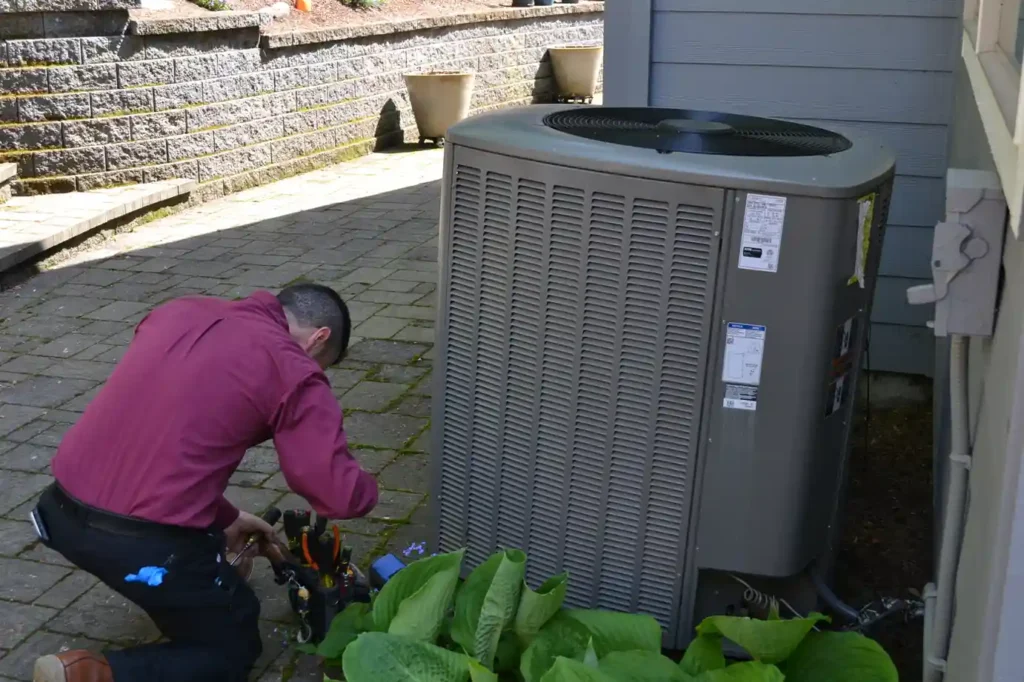
Hissing noises and poor AC performance are signs you need a heating, ventilation, and air conditioning (HVAC) evaluation. These symptoms indicate low refrigerant levels, which can cause additional wear on your unit. Because refrigerant can only become low if there is a leak, you’ll need a professional evaluation to find and fix the problem.
So, does your AC have a refrigerant leak? To learn why leaks happen and what to expect from your inspection, read on.
What Refrigerant Actually Does in an AC System
Refrigerants are responsible for transferring heat. The compressor raises the refrigerant’s pressure and temperature, and the condenser releases heat until the refrigerant condenses into a liquid. This allows the excess heat to be released into the outdoor air. Once this occurs, the refrigerant can be circulated back into your home to restart the process.
Your AC’s refrigerant lines are a closed system, so they should, in theory, never be recharged. The only way your refrigerant levels can drop is if there is a leak letting the refrigerant escape.
Most Common Signs of a Refrigerant Leak
Does your AC have a refrigerant leak, or is something else wrong? If you notice the following AC refrigerant leak signs in Portland ACs, it’s time to schedule a professional inspection.
Reduced Cooling
When there is low refrigerant in an AC, symptoms like poor performance and extended runtimes will frequently occur. The system must run longer because it has reduced cooling capacity. Because this can also be a symptom of other problems, it’s important to have the problem diagnosed by a professional.
Frozen Evaporator Coil
When refrigerant levels are low, the pressure in the coil drops. Lower refrigerant pressure reduces the refrigerant’s boiling temperature, allowing the evaporator coil to become cold enough for moisture to freeze. Over time, ice will build up on the coil.
Hissing or Bubbling Sounds
While you may notice an AC hissing with a refrigerant leak, it can also occur due to other problems. Any hissing and bubbling sounds are warning signs that should be checked out right away.
Long Run Times and Higher Bills
When the refrigerant levels are too low, the system has to work harder to cool your home. This leads to longer run times and higher energy costs.
Warm Air From Vents
If the refrigerant levels are low, you may notice warm air coming from the vents, especially on hotter Portland days.
Signs That Point to Another Problem Instead
It’s important to note that many of these symptoms can be caused by other problems as well. Poor cooling performance can also be caused by restricted airflow from a dirty filter or damaged ductwork. Thermostat issues can lead to warm indoor air or long runtimes. Meanwhile, a dirty coil can freeze or lead to poor performance.
Safe Steps Homeowners Can Take Before Calling
Whether you’re dealing with a dirty filter, frozen coil, or refrigerant issue, there are a few basic troubleshooting steps you can take before you reach out for professional AC repairs.
- Check the Filter: First, see if the filter needs to be changed. Additionally, make sure that the return and supply vents are open and unobstructed. Bad airflow is a frequent cause of poor AC performance, frozen coils, and extended runtimes.
- Listen and Observe: Listen for hissing or bubbling sounds. You should also note if ice is visible on the evaporator coil.
- Don’t Touch Refrigerants: Never handle the refrigerant or sealants on your own. Under the Environmental Protection Agency’s regulations, refrigerants can only be handled by a certified technician.
If basic troubleshooting doesn’t work, reach out to Central Air Heating, Cooling & Plumbing for a full evaluation.
How a Technician Confirms a Refrigerant Leak
When you reach out about AC refrigerant leak signs in Portland, one of our HVAC technicians will quickly come to your home to perform diagnostics.
Temperature Split Test
We will start by performing a temperature split test. This involves checking the air temperature going into your system and leaving it. If the difference is lower than normal, you may have low refrigerant levels.
Pressure Readings
Pressure readings may indicate low refrigerant levels that suggest a leak. We will compare the pressure level to what it should be at the current outdoor temperature. If it is unusually low, your system may have a leak.
Leak Search
We never top off refrigerants without performing diagnostics because multiple issues can cause similar symptoms, and because EPA regulations require technicians to repair leaks rather than repeatedly adding refrigerant. If we have determined that your refrigerant levels are low, the next step is finding the leak. Then, we can recommend the best refrigerant leak repair for your Portland home.
Component Inspection
As a part of our troubleshooting, we’ll also inspect the coils, filter, blower motor, and compressor to see if they are the source of the problem. For example, weak seals, damaged braze joints, and coil failures can allow the refrigerant to escape. Alternatively, a failing blower motor or dirty filter can cause symptoms that appear the same as an AC refrigerant leak.
Repair vs. Replacement When a Leak Is Found
While some leaks can be easily repaired, there are situations where an AC replacement is necessary. For example, new AC installations with R-410A refrigerant can no longer be manufactured. Because of this, performing R-410A leak repair in Portland might not always be the best choice. This type of refrigerant will become more costly as time goes on, so it often makes more sense to replace aging R-410A units.
If your unit is relatively new and the only problem is a refrigerant leak, performing repairs is an effective option. Unusually high energy bills, an older unit, a history of frequent repairs, high-cost repairs, and declining performance are all signs that an AC replacement may be the best course of action instead.
Schedule AC Repair in the Portland Metro
If you notice AC refrigerant leak signs in Portland, we can help. Visible ice, unusual noises, and loss of cooling are all indications that there may be a leak. By reaching out to Central Air, you can quickly detect and repair the leak.
Book your next AC installation, maintenance, or repairs today.