There are a few common furnace repairs in Portland that tend to occur the most. Furnaces that have been allowed to sit all summer are more likely to encounter issues when they are initially restarted in the fall. Because of this, it’s a good idea to schedule a routine tune-up ahead of the heating season to ensure your furnace is ready.
What Furnace Problems Usually Have in Common
The most frequent furnace failure signs we see tend to involve no heat, weak heat, unusual odors, short cycling, odd noises, or uneven comfort. While the symptoms can help us narrow down the list of possible causes, the actual cause must still be determined through professional diagnostic testing.
Furnace Repairs That Come Up Often
At Central Air Heating, Cooling & Plumbing, we tend to see the most common furnace repairs repeatedly.
Dirty Flame Sensor or Ignition Trouble
Soot and grime can build up on the flame sensor over time. When this occurs, the sensor can’t detect that a flame is present. This results in repeated lockouts. Ignition problems can involve delayed ignition, failed ignition attempts, and similar symptoms. Because of the safety issues involved, these issues should only be addressed by a trained professional.
Thermostat or Control Problems
If the thermostat, control, wiring, or signal is not working, there may be incorrect readings. It may also fail to call for heat.
Blower Motor or Airflow Problems
One of the most common furnace problems is dirty filters. These filters should be changed every 30 to 90 days, depending on the manufacturer’s specifications. During periods of peak use, they must be replaced more often.
If the furnace has a dirty filter or blower issues, it can restrict airflow. In turn, weak airflow can cause overheating. Once the furnace’s temperature reaches a certain threshold, the unit will shut off as a safety mechanism.
Pressure Switch or Venting Issues
Improperly pitched or sagging vent pipes, blocked condensate drain lines, faulty pressure switches, and similar issues can trigger furnace fault codes. When the furnace detects a venting or pressure-switch problem, the control board prevents or stops burner operation to help ensure combustion gases are safely vented.
Your pressure switch is an important safety component. Because of this, you should never attempt to perform switch or venting repairs on your own.
Condensate Drain Problems
One of the reasons high-efficiency furnaces are so efficient is that they use a secondary heat exchanger to extract heat from the exhaust gas. This cooling causes the water vapor to turn to a liquid, which is then directed away from your furnace and home with the help of a condensate drain line.
Your system can shut down if the line is blocked, damaged, or otherwise unable to remove the condensate liquid. If part of the condensate drain is routed through an area exposed to freezing temperatures, the condensate can freeze and block the line. Once the line has frozen, it can cause the furnace to shut down.
Symptoms Homeowners Notice First
In Portland, there are a few symptoms that homeowners tend to notice before the furnace actually breaks down and requires emergency repairs. By getting help as soon as you notice these symptoms, you can avoid more complicated, inconvenient breakdowns later on.
- The furnace starts and stops more often than normal.
- Your home stays lukewarm even though the furnace keeps running.
- Some of your rooms are cold, while other rooms are warm.
- Your energy bills have jumped for no obvious reason.
- The furnace has started making a new sound.
- You noticed an unusual odor coming from the furnace.
Searching for residential furnace repair near me? We can help. Reach out to Central Air Heating, Cooling & Plumbing for help with your unusual furnace noises, performance issues, and more.
What Homeowners Can Check Safely
While most common furnace repairs should be left to the professionals, there are a few troubleshooting steps you can do on your own.
- Check the Thermostat: Make sure your thermostat mode is set to “heat”. The fan should be turned to “auto.”
- Inspect the Filter: See if the filter is clogged, and replace it as needed.
- Open the Vents and Returns: Walk around your house to verify that the vents are open and unobstructed by furniture.
- Check the Breakers: Open your breaker panel to see if any breakers have tripped. You can try resetting the breaker once. If it immediately trips again, this indicates an underlying problem that must be addressed by a professional.
You should immediately stop and call for help if the problem keeps repeating. Additionally, immediate furnace repairs are necessary if you notice an unusual odor, see sparks, or have no heat.
What a Professional Furnace Diagnostic Includes
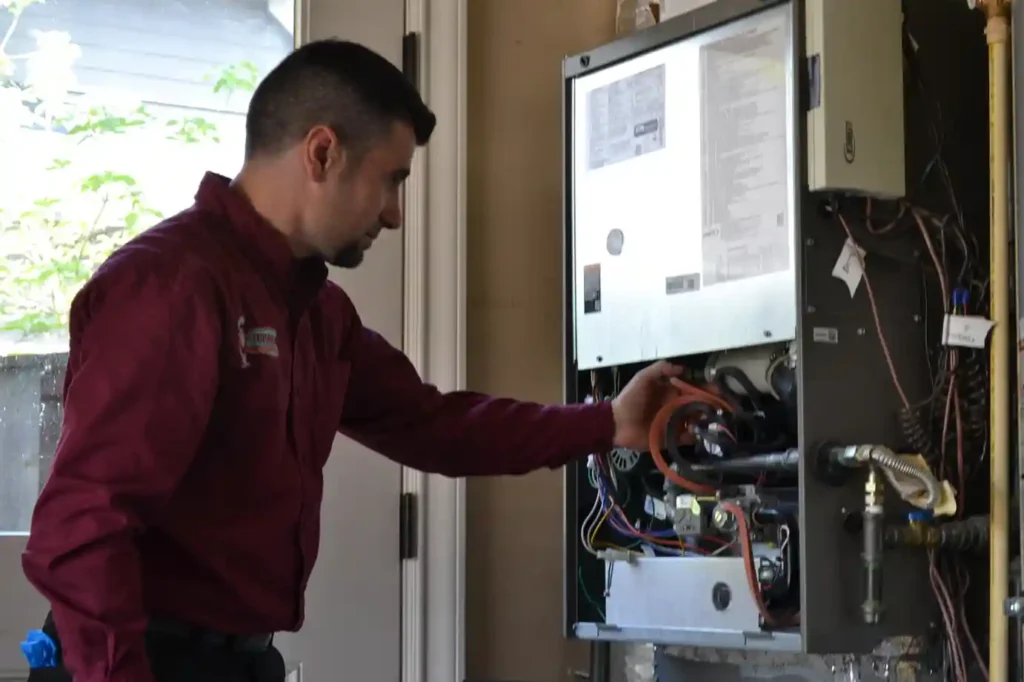
When you reach out for help with the most common furnace repairs in Portland, our team will quickly come out to your house to perform diagnostic testing. We’ll test your ignition, thermostat signal, and electrical system. Besides inspecting your heat exchanger and checking combustion safety, we’ll also inspect your blower and airflow. Once we’ve completed our testing and repairs, we’ll perform final performance testing before we leave.
How Maintenance Helps Prevent Repeat Repairs
You can avoid unexpected breakdowns and the most common furnace repairs through consistent maintenance. We recommend scheduling a fall tune-up before the coldest months of the year arrive. With our membership plan, you can access complimentary tune-ups, special promotions, and repair discounts.
Schedule Emergency Furnace Repair in Portland
Looking for local furnace repair near me? By working with a reliable local HVAC company, you can get professional diagnostics and access common furnace repairs in Portland. Furnaces don’t break on a 9-to-5 schedule; that is why our licensed technicians are ready with 24/7 emergency services.
When you reach out to Central Air Heating, Cooling & Plumbing, make sure to tell us what the symptom is, when it happens, and whether this is a new or recurring problem.
Call 971-435-7303 for a prompt furnace inspection and repairs.