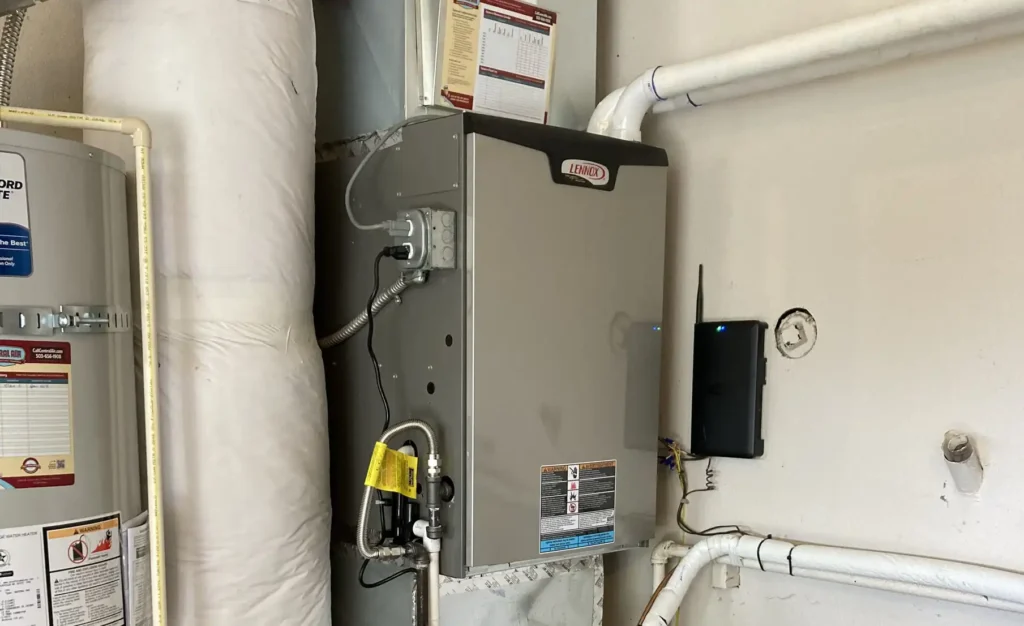
A furnace leaking water when the heat is on should be immediately addressed. While a condensing furnace can produce water during the normal heating cycle, any water that escapes onto the ground is an immediate cause for concern. The water accumulation could be due to a drainage issue, an accessory, or nearby plumbing.
Because the location of the water is not enough to diagnose the issue on its own, it’s essential to reach out for a professional furnace assessment. In the meantime, you can use our guide to understand potential sources of water and how our team will diagnose the issue.
What Should You Do First When You See Water?
When you first notice water pooling around a furnace, you should exercise caution. Stay clear of any wet electrical equipment. You can shut off the unit and dry up the water if it is safe to do so. However, if you are unable to tell where the leak is coming from or what electrical equipment is affected, it is better to be safe and call for repairs first.
Gas odors and carbon monoxide alarms represent an emergency situation. If either occurs, you should leave your home immediately and contact your gas utility provider or 911 once you are in a safe location. Do not try operating any switches.
For your safety, you should never touch exposed wiring or open the furnace cabinet. Additionally, do not repeatedly restart equipment to reproduce the leak. Instead, you should call our heating, ventilation, and air conditioning (HVAC) technicians for professional diagnostics.
Why Do Some Furnaces Produce Water During Heating?
As a homeowner, it’s important to understand what causes sudden water accumulation versus recurring furnace moisture and corrosion. In a condensing furnace, a secondary heat exchanger helps your home absorb more of the heat produced. This causes the combustion gases to cool significantly, allowing water vapor in the exhaust to condense into liquid.
Normally, this liquid is diverted away from your home with the help of a condensate drain line. If the drain line is clogged or another issue occurs, water may accumulate.
This type of process is different from dampness and corrosion. In West Hills homes, excessive indoor humidity can lead to these issues. Additionally, there are situations where non-condensing furnaces may also seem to leak water.
Where Could the Water Be Coming From?
If your furnace is leaking water when the heat is on, there are a few common reasons why. By noting the symptoms, when the leak occurs, and where it occurs, you can narrow down the likely cause. For an accurate diagnosis, schedule your next furnace service with professional technicians.
Condensate Drainage or Connections
One of the leading causes of furnace-related leaks is the condensate drainage system. If a tube or connection is blocked, damaged, or disconnected, water can escape.
In a high-efficiency furnace, a secondary heat exchanger allows your system to absorb extra heat. This causes water vapor in the combustion gases to condense into liquid, which is removed through the condensate drainage system.
An experienced technician can inspect your system to evaluate what is causing the drainage problem. They can remove the trap, repair the hose, clear the drain, and inspect the vent for obstructions.
A Condensate Pump, If One Is Installed
Sometimes, a high-efficiency furnace leaking water is due to a faulty condensate pump. These pumps are used to move water against the flow of gravity. For example, they may be necessary for high-efficiency furnaces that are located in a basement.
If the pump isn’t working, you may notice that the reservoir is overflowing. A safety shutdown can also happen, leading to no heat coming from your vents. While these symptoms are indicative of a pump failure, they do not definitively prove it.
For the safety of your home and furnace, you should never try testing the pump or opening the reservoir yourself. Additionally, never bypass the safety switch if your furnace keeps shutting down. Safety shutdowns occur for a reason. A skilled HVAC technician can diagnose the cause of the shutdown and help you determine the most effective solution.
An Attached Humidifier or Nearby Plumbing
There are also other causes that can cause moisture accumulation near your furnace. If you have a furnace-mounted humidifier, this could be the cause of your leak. Cooling-related leaks can also occur if your cooling system has been in use.
Sometimes, leaks occur near the furnace that aren’t actually from the HVAC system. Your plumbing system can develop leaks, loose connections, burst pipes, and other issues. If there are exposed pipes or fixtures, you can check around them to see if there is a leak. When leaks are present, you may also hear the sound of running water, even when no one is actively using water in your home.
Many homes have water heaters located near the furnace. A leaky water heater can quickly become an emergency, so reach out for help if you think that this may be the issue.
What Can You Observe Without Opening the Furnace?
While repairs should be left to the professionals, there are a few observations you can make on your own. These observations do not confirm the cause of the issue, but they can help you narrow down the potential source.
- See if the thermostat was calling for heat when the water first appeared.
- Locate where the water is collecting. You should only do this from a safe, dry location.
- Pay attention to whether the water appears while the furnace is operating or idle.
- Check your vents to verify if your home is receiving heat or not.
- Consider whether any recent maintenance, thermostat work, or plumbing work could be involved.
- Note whether an error message was visible on the ordinary display or through an existing viewing window.
For your safety, you should never reach around equipment. Do not try to check concealed piping. Additionally, you should never deliberately run a leaky system.
Could a Frozen Drain Be Involved?
If your furnace is leaking water in winter, a frozen furnace condensate drain could be at fault. You will likely notice ice on the outside drain, water backing up near the furnace, short cycling, and a lack of heat. Once ice freezes in the drain line, it blocks water from leaving your home. As a result, water begins to pool up around your unit.
While frozen drain lines are a common cause, they are not the only one. When an active leak occurs at above-freezing temperatures, another problem is typically at fault.
When to Arrange Furnace Service and What to Tell the Technician
If your furnace appears to be leaking water, there are a few things you can do to troubleshoot before calling for help. As long as it is safe to do so, you can shut off the system at the thermostat or breaker box. Then, clean up the water.
You should also check if the filter is dirty and replace it as needed. If your cooling system has been running recently, the moisture could be due to a frozen evaporator coil and not the furnace itself.
Most problems related to water leaks cannot be easily identified on your own. You should reach out for help in the following situations.
- Your furnace continues to leak.
- There is water near electrical components.
- The furnace experiences repeated shutdowns.
- You cannot identify the source of the leak.
Once you reach out to our team, we will quickly diagnose the source of the water. We’ll evaluate your system’s drainage and equipment operation before recommending the best methods for repairing the issue.
Schedule Your Next Maintenance Appointment
Unsure why your furnace is leaking water when the heat is on? By reaching out to Central Air Heating, Cooling & Plumbing, you can get a professional furnace diagnosis. If the cause of the problem is your home’s plumbing, we can help with that as well.
Book your diagnostic appointment by filling out our online form or calling us at 971-435-7303 today.