When you first turn your shower on, the water feels pleasantly hot and relaxing. If the temperature drops after just a few minutes, there may be an underlying problem going on. Changes in your household’s demand, recovery issues, operating settings, and equipment performance can all impact whether your hot water runs out quickly.
A short shower doesn’t always mean that there is a failed plumbing component or an undersized water heater. By troubleshooting basic maintenance and consumption changes, you can determine when your water heater is functioning as expected and when you need to reach out to Central Air Heating, Cooling & Plumbing for help in the Portland area.
Has the Routine Changed, or Has the Supply Changed?
If your hot water runs out faster than before, the first factor to consider is how your routine and supply have changed. A busy morning with many extra guests will end up using up more hot water than your family’s normal routine.
Showers aren’t the only way that hot water may be used. Taking baths, running laundry, washing dishes, and taking a shower all use up hot water. If these activities occur at overlapping times, you can end up using more hot water than your tank can supply.
Around the holidays, it’s fairly common to notice that a home’s hot water supply appears to be disappearing faster. When holiday guests are visiting or staying overnight, the changed demand can impact whether hot water remains in the tank. As long as the lack of hot water corresponds to changes in demand, it is likely not an issue.
To help narrow down the cause of the problem, we’ve compiled a basic breakdown of different symptoms and what they may mean.
| What You May Notice | What It May Mean |
|---|---|
| Increased hot water demand | Extra guests or overlapping showers, baths, and laundry may be using up hot water faster than it can be made |
| No change in demand | There may be an issue with how the hot water heater heats or stores hot water |
| Only one fixture lacks hot water | The fixture’s faucet, valve, or mixing components may not be working properly |
| Every fixture is affected the same | There is an issue with the hot water heater or how your home distributes hot water |
Why Do Tank Capacity and Recovery Both Matter?
To understand why you don’t have enough hot water, you first need to know what stored hot water, reheating after use, and first-hour rating mean. While your tank size tells you how much water it can hold, it won’t actually show how much usable hot water is available for delivery.
- Stored Hot Water: The stored hot water reflects the physical volume of water held in your tank.
- Reheating After Use: This is also known as your water heater’s recovery rate. The water heater’s recovery time is generally measured in gallons per hour (GPH) and shows how much incoming cold water your tank can heat in an hour.
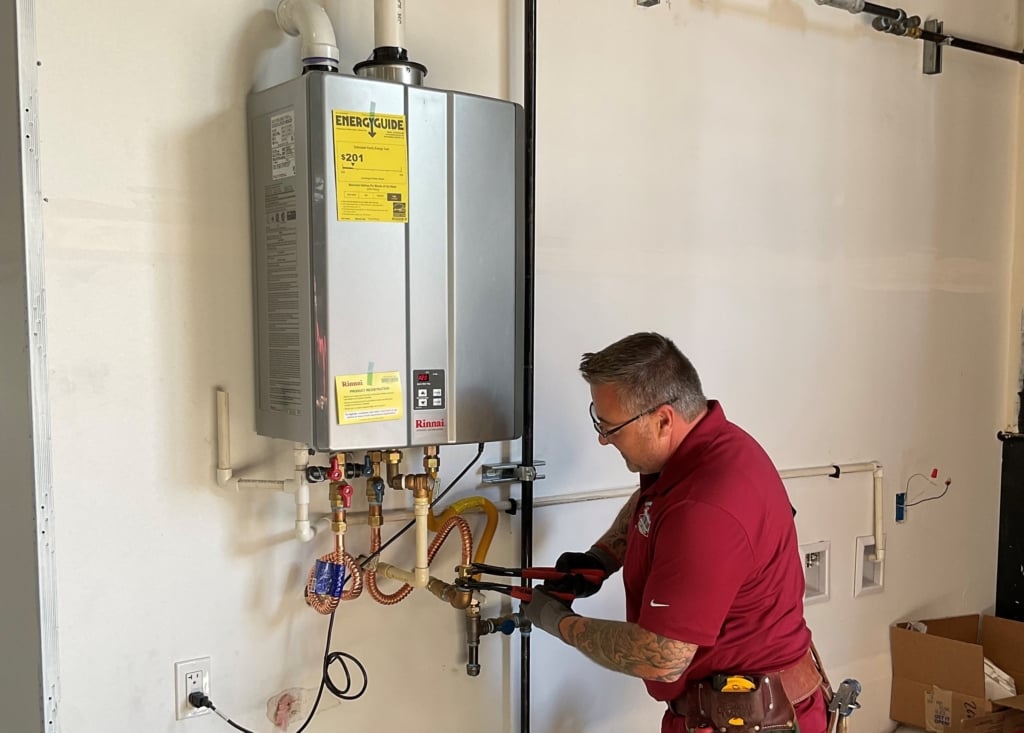
- First-Hour Rating (FHR): If you check your unit’s yellow EnergyGuide label, you will see the FHR listed. This figure represents how many total gallons of hot water your tank is able to deliver in one hour. Differences in burner rates and other factors can mean that a smaller tank can sometimes outperform a larger tank.
There are a few important caveats to consider as well. With your stored hot water, the actual amount stored isn’t the amount you have available to use at that temperature. As hot water is used, it is replaced with cold water. This effectively dilutes and lowers the temperature of the water remaining in the tank. Similarly, the recovery time can vary based on the fuel type and the temperature of the incoming water.
Does the Problem Affect One Shower or the Whole Home?
Before you call for repairs, it helps to differentiate between whether a single shower or your entire home is affected. It is also important to consider whether you have weak hot-water flow rather than water turning cold. When the flow is weak throughout your home, you may be dealing with a water pressure issue or a restriction in your plumbing system.
If the water flow remains strong but becomes cool in just one fixture, it may be due to a mixing control or limit setting. When this type of issue affects every fixture in your home, the problem is likely related to your hot water tank or hot water supply.
What Might a Plumber Investigate?
If you do not have enough hot water for showers, a plumbing inspection can help. Our team will evaluate whether the heater is producing its intended output. We will check your controls, heating components, plumbing system, and mixing components to make sure water is being heated and delivered properly.
The right solution depends on the cause. For instance, sediment buildup in the bottom of the tank can interfere with heat transfer in some water heaters, increasing recovery time and potentially reducing the available hot water. Typically, this issue is fixed by scheduling routine maintenance and having the tank flushed. Meanwhile, an issue with a valve or mixing component may involve a replacement of that component.
What Can You Record Before Calling?
Before you call for water heater issues, there are a few things you should do. These steps will make it easier for the plumber to diagnose the issue. Additionally, there are a few ways you can manage a limited supply of hot water while you wait for water heater repairs.
- Record the heater type and model label. This will make it easier to check what is normal for your unit.
- Note which fixtures are affected and any recent household changes. Additionally, monitor whether warmth returns after an ordinary gap between uses or if it stays cold.
- Stagger water usage while you wait for repairs. Until the problem can be fixed, this can help you maintain your comfort and the warmth of the water.
Important Safety Note: For your safety and the safety of your plumbing system, do not open electrical panels, raise the temperature, test elements, adjust relief valves, or drain the tank. These are tasks that should be handled by a professional. If you experience an active leak, loss of all hot water, or urgent water-heater problems, call for repairs immediately.
When Is Service More Useful Than Changing Your Routine?
If your hot water runs out quickly, staggering showers and changing your day-to-day routine will only be a temporary fix. Any persistent decline necessitates an assessment. For example, an occasional shortage during periods of unusually high demand may not be concerning. If it occurs frequently, it may reflect an underlying capacity issue.
Our plumbers will evaluate your tank to determine if it is sized appropriately and functioning properly. Replacing your water heater is only the solution if the situation absolutely calls for it. In many cases, we can fix problems through water heater maintenance and flushing. If the problem is due to a failed fixture or faulty component, we can diagnose and replace the faulty part.
Schedule Your Next Plumbing Inspection
Struggling with hot water that runs out quickly? We can help. Central Air Heating, Cooling & Plumbing offers prompt, same-day service, upfront pricing, and flexible financing options. We will evaluate your system and give you an honest recommendation.
Book your water heater repair and maintenance by calling us at 971-435-7303 today.