
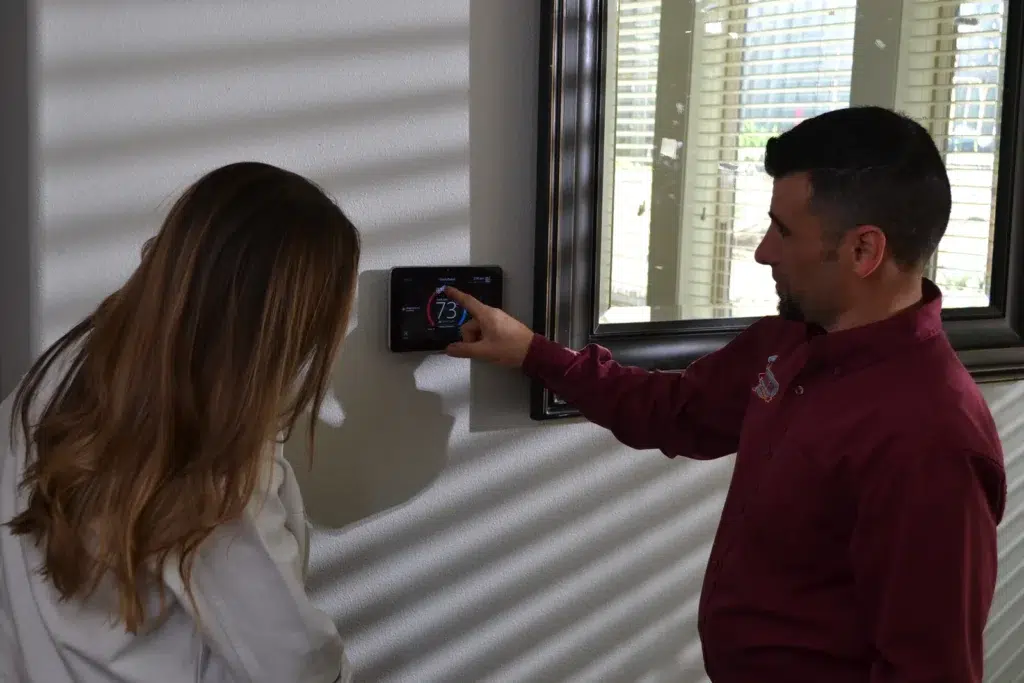
While they might sound like they are used for similar purposes, there is a major difference between auxiliary heat and emergency heat. As a homeowner, you may notice these terms on your thermostat when heating resumes. Auxiliary heat is normally called by the unit automatically, while emergency heat is a manually selected backup mode on systems that support it.
Seeing “AUX” by itself does not mean your unit is failing. Each heating, ventilation, and air conditioning (HVAC) setup is designed with different mode settings, so reach out to Central Air Heating, Cooling & Plumbing to find out how your system is set up.
What AUX Heat and Emergency Heat Mean
As a homeowner, it helps to understand what emergency heat and auxiliary heat mean. Our team can also help you understand other thermostat modes and settings.
AUX Heat Is Called Automatically
So, what does “AUX Heat” mean? If you see “AUX Heat” on your thermostat, your system is calling for supplemental heat. This supplemental heat helps to back up the heat pump if it can’t keep up due to extreme weather, repair issues, or major changes to the temperature settings.
Emergency Heat Is a Selected Backup Mode
Meanwhile, emergency heat is available on compatible systems that have a backup heat source, so not every system has this option. On systems with a manually selected emergency heat mode, the homeowner activates this setting when the heat pump cannot provide normal heating. To use this setting correctly, you should always consult the manufacturer’s instructions for your equipment.
For an easy breakdown of auxiliary heat vs. emergency heat, check out the table below.
| Auxiliary Heat Mode | Emergency Heat Mode | |
|---|---|---|
| Activation | It turns on automatically when the heat pump needs supplemental heating, such as during extremely cold weather, a defrost cycle, or a major increase in the thermostat setting. | This mode turns on when the homeowner changes the setting. For example, homeowners may use emergency heat while their heat pump is being repaired. |
| Purpose | Auxiliary heat supports the heat pump’s normal functions. | Emergency heat provides heat when the heat pump cannot do so. |
| Next Steps | As long as auxiliary heat does not run excessively, no other steps are necessary. | If your heat pump isn’t running properly, you should reach out to an HVAC technician for help. |
Why Auxiliary Heat Can Turn On
Your thermostat may turn on auxiliary heat in a few common situations.
- You changed the thermostat’s setpoint substantially, so auxiliary heat is needed to reach the new temperature level.
- The heat pump is temporarily using defrost mode.
- Your home’s heating demand is more than what the heat pump can supply alone.
Whether “AUX Heat” switches on or not depends on your equipment, controls, and home conditions. As long as this mode doesn’t switch on or stay on excessively, it is likely a part of the unit’s normal operation.
Why Does AUX Heat Appear When It Is Not Very Cold?
Ever wondered, “Why is auxiliary heat on in mild weather?” In October, your heat pump should generally be able to keep up with the outdoor temperatures. However, if you have recently adjusted your thermostat, backup heat may sometimes be needed to reach the new setpoint.
While auxiliary heat mode may be temporarily needed to reach a significantly different setpoint, your system should not require auxiliary heat frequently or for extended periods of time. If you notice that continuous backup heat is needed, it’s time to schedule a diagnostic appointment.
Should You Switch to Emergency Heat?
Emergency heat is not a routine setting used to heat your home. It will not heat your home faster, and it should not be necessary the majority of the time. Electric-resistance backup heat generally uses more electricity than your heat pump, so using it for extended periods can be costly. If your heat pump has failed, you should check your equipment manual or reach out to our team for professional guidance.
What to Check Before Changing More Settings
Our team can help you address thermostat compatibility and control concerns. Before you reach out for professional help, there are a few things you can check before changing the settings or calling for repairs.
- Note the exact thermostat label you see, such as “AUX Heat” or “EM Heat.”
- Check your current room temperature and the setpoint on your thermostat.
- Review any recent schedule changes or temperature increases.
- See if the home is maintaining a comfortable temperature.
- Pay attention to whether the thermostat label appears temporarily or persists for an extended period.
- Consider any recent thermostat installation, service, or fault message.
When to Have the Heat Pump or Thermostat Checked
Once you understand the difference between “AUX Heat” versus “EM Heat,” the next step is determining when you need to reach out for extra help. As a homeowner, you should have persistent backup heat operation checked by a professional HVAC technician. Especially during mild and moderate fall weather, your auxiliary heat should not be kicking on frequently.
We also recommend reaching out for help in a few other situations. You should contact our team if your home remains cold. Error messages on your thermostat and changes in its operation after thermostat work are also signs that professional help is necessary. When in doubt, our HVAC technicians are available to test your unit, inspect for common issues, and determine the best repair solutions for your needs.
Prepare Your Home for Cooler Weather
With winter coming up, now is a good time to schedule tune-ups and address heating issues. Our team can help you understand the difference between auxiliary heat vs. emergency heat. If your unit frequently relies on “AUX” mode in mild or moderate weather, we can also diagnose problems that could be contributing.
Schedule your next heat pump repair or maintenance by calling Central Air at 971-435-7303.